
Highland Park has been called a lot of things over the years: an early Los Angeles suburb, an Arts and Crafts enclave, the heart of Northeast LA, one of the city's great Latino neighborhoods and, more recently, one of its most sought-after places to live.
The truth is more interesting than any of those descriptions on its own.
Highland Park is layered. Century-old Craftsman homes sit above commercial streets that can move from a generations-old neighborhood institution to a wine bar, record shop or restaurant within a block. York Boulevard and Figueroa Street give the neighborhood two distinct centers of gravity, while the residential streets climbing away from them can feel surprisingly quiet and removed.
I've been selling homes in and around Highland Park since roughly 2011. I've watched the market move from bank sales and early renovation projects to sophisticated design homes selling well into the millions.
What has kept Highland Park interesting isn't simply that it became more expensive.
It's that it never became just one thing.
Highland Park is polished enough to have become a destination, but not so polished that every block feels predetermined.
That's part of the appeal.
Walk York Boulevard and you'll find coffee shops, restaurants, bars, vintage stores and people pushing strollers past businesses that have been here much longer than Highland Park has been considered fashionable.
Figueroa has its own rhythm. It's broader, busier and increasingly full of destinations, but it still feels different from York.
And then you turn off either corridor and the neighborhood changes again.
The streets climb.
The commercial noise falls away.
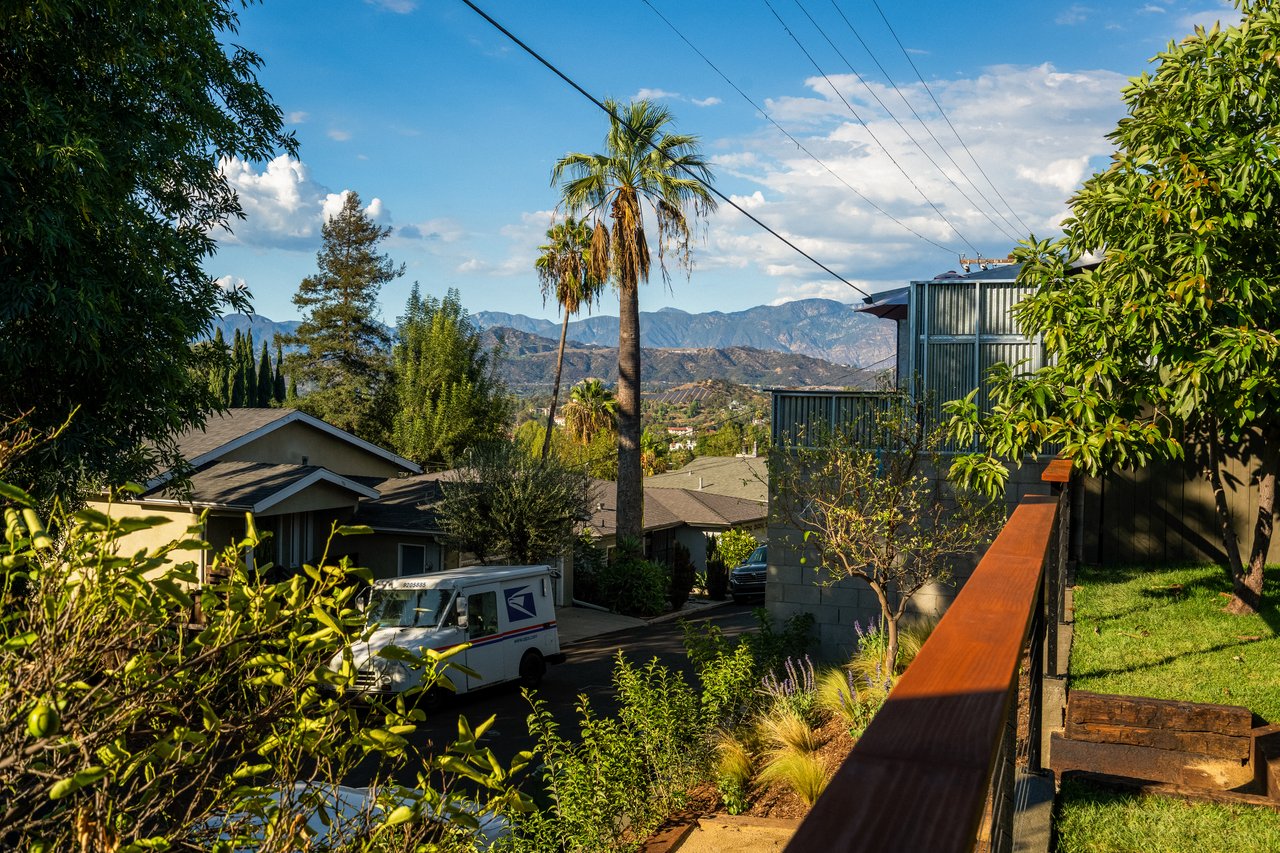
Bungalows and Craftsman homes appear behind mature landscaping. Some houses have views. Others feel tucked into little pockets you wouldn't know existed from the main road.
Highland Park rewards people who explore it rather than simply drive through it.
One of the mistakes people make when they're new to Highland Park is treating the neighborhood as though it's one uniform place.
It isn't.
Living a few blocks from York is a very different experience from living higher in the hills. A quiet residential street can feel worlds away from a property on a major corridor even when the two homes are geographically close.
That's important for lifestyle.
It's also important for real estate.
I've learned over the years that buyers here are unusually sensitive to micro-location. Traffic, walkability, elevation, views, parking, lot orientation and proximity to the commercial corridors can all meaningfully affect how a property is perceived.
Sometimes the house isn't the biggest difference between two sales.
The street is.
You can't really separate Highland Park's identity from its architecture.
This is one of Los Angeles' older residential neighborhoods, and much of what makes it visually distinctive comes from the homes built during its early development.
Craftsman bungalows are probably the architecture most associated with Highland Park, but you'll also find Spanish-style homes, California bungalows, Victorians, hillside houses, duplexes, mid-century interventions and newer construction.
Some have been meticulously restored.
Some have been creatively reinvented.
Some have been renovated several times with varying levels of success.
And some are still waiting for somebody to figure them out.
I like that mix.
Working with renovation properties here taught me early that buyers can tell the difference between a house that has been thoughtfully redesigned and one that has simply been given a package of trendy finishes.
Highland Park buyers tend to be visually literate.
They notice materials. They notice landscaping. They notice whether an addition makes sense. They notice when the architecture and the renovation are fighting each other.
That makes good design particularly valuable here.
Any description of Highland Park that starts with cocktail bars and expensive houses misses most of the story.
The neighborhood has a long history as one of Los Angeles' early suburbs and as a center of the Arts and Crafts movement.
Later, generations of Latino families and businesses shaped much of the Highland Park people recognize today.
More recently came another dramatic period of change as artists, designers, young families and buyers priced out of other parts of Los Angeles began moving into Northeast LA.
That change brought investment, restoration and a remarkable restaurant and retail scene.
It also brought displacement and understandable anxiety about what gets lost when a neighborhood becomes desirable to people with substantially more money.
Both things can be true.
Highland Park can be one of the most exciting neighborhoods in Los Angeles and still have a complicated relationship with its own popularity.
I think understanding that history makes you appreciate the neighborhood more, not less.
If you want to understand Highland Park quickly, spend time on both York Boulevard and Figueroa Street.
York has the more intimate neighborhood feel.
It's where much of Highland Park's contemporary identity first became visible: independent restaurants, coffee shops, bars, vintage, design and small retail mixed into an existing neighborhood commercial street.
It's walkable, social and often busy without feeling like a traditional Los Angeles commercial district.
For buyers who specifically want to walk out their front door and be part of that energy, proximity to York can be a major draw.
Figueroa feels bigger.
It carries more traffic and stretches through a different collection of businesses, restaurants, nightlife and neighborhood institutions.
It's also where you'll find some of Highland Park's most recognizable landmarks and access to the Metro A Line.
Figueroa has changed enormously, but it hasn't become interchangeable with York.
I think that's important.
Highland Park is better for having both.
Highland Park's food scene is now good enough that people cross Los Angeles specifically to eat here.
But the reason I like it isn't because there's a neat list of "best restaurants."
It's the range.
Longstanding neighborhood restaurants and taco spots coexist with places that could just as easily have opened in Silver Lake, Los Feliz or the Arts District.
There are bakeries, wine bars, neighborhood bars, destination restaurants, casual counters and places where you can still eat extremely well without turning dinner into an event.
Some favorites and neighborhood fixtures worth knowing include:
Villa's Tacos — Blue-corn tacos that went from local phenomenon to one of Highland Park's most recognizable food destinations.
Joy — Taiwanese comfort food on York that has become one of the neighborhood's dependable standbys.
Belle's Delicatessen — Highland Park's take on the Jewish deli, with a particularly good bagel following.
Highland Park Bowl — More than a place to bowl. The restored historic space is one of those rare LA renovations where the building itself is the reason to go.
El Huarache Azteca — The kind of longtime neighborhood restaurant that's important to remember when talking about Highland Park's newer food scene.
The restaurants will change.
The fact that Highland Park is a place where independent businesses can create a real following probably won't.
This is not the neighborhood where I'd give someone a checklist of twelve attractions and tell them to complete it.
Walk.
Start on York.
Get coffee.
Go into something because the window looks interesting.
Drive or walk over to Figueroa.
Look at the buildings.
Then get off the commercial streets and explore the residential blocks.
That's where Highland Park starts making sense.
You'll find vintage, records, books, design, small retailers and businesses that don't necessarily exist anywhere else in Los Angeles.
That independence is a big part of the neighborhood's personality.
This is where my perspective is probably different from a traditional neighborhood guide.
I've been involved with Highland Park real estate through very different versions of this market.
One of my early renovation transactions involved a bank-owned property purchased for roughly $280,000 and later resold around $530,000.
Years later, I've represented sophisticated design properties in the broader Highland Park/Mount Washington market selling for more than $3 million.
Those numbers aren't meant as comparable sales.
They're bookends.
They illustrate just how dramatically the market—and the product—has evolved.
Today you'll find everything from small bungalows and fixers to highly designed renovations and substantial hillside homes.
That's why I don't love broad statements like:
"Homes in Highland Park are worth X per square foot."
Sometimes that's useful.
Sometimes it's almost meaningless.
A busy street can materially affect value.
So can a view.
So can parking.
So can lot usability.
So can architecture.
So can whether a renovation feels thoughtful or generic.
Two homes a few blocks apart can create completely different buyer reactions.
That's Highland Park.
My first Highland Park sale was around 2011.
Since then, the neighborhood has taught me some of the most durable lessons of my career.
At 5153 Irvington, I learned the renovation-resale business in an era when the economics of renovating Highland Park looked completely different.
At 5415 Monterey Road, just across the 110 in Hermon, I learned how dramatically a busy street can affect what buyers are willing to pay.
At 6235 Annan Way, I helped a client through the longer life cycle of a property—from investment to rental to eventual resale.
At 6150 Burwood, our in-house design work helped reinforce my belief that design, brokerage and marketing should not be separate conversations.
At 1107 Le Gray, an off-market opportunity required weeks of negotiation before we reached a number that worked and ultimately appraised.
And at 4730 San Rafael, on the Mount Washington edge of the broader 90042 market, I saw just how high the ceiling had become for truly special design-driven properties.
The lesson isn't that I've sold a bunch of houses here.
It's that each one taught me something different about how Highland Park works.
What 15 Years of Selling Homes in Highland Park Taught Me About Northeast Los Angeles Real Estate
Don't buy the ZIP code.
Buy the house and the street.
Spend time in the neighborhood at different times of day.
Walk from the house to the places you think you're going to walk to.
Listen when you're standing in the backyard.
Try the parking.
Pay attention to the slope.
Look at neighboring properties.
If the house has been renovated, look beyond the finishes and ask whether the underlying decisions actually improved it.
And don't assume a property is wrong simply because it has an objection.
A busy road, unusual layout or unfinished condition can create opportunity if the price compensates you for it.
The important thing is understanding the tradeoff before you buy it—because the next buyer will notice it too.
You don't need to make your house perfect.
You need to understand what makes it valuable.
Sometimes that means renovation.
Sometimes it means landscaping.
Sometimes it means removing half the furniture.
Sometimes it means doing almost nothing and letting a great piece of architecture speak for itself.
The mistake is spending money without knowing which buyer you're trying to attract.
I've spent years working with renovation artists and design-driven properties, and one lesson keeps repeating:
The real estate strategy shouldn't begin when the renovation ends.
Design affects the buyer.
The buyer affects the positioning.
The positioning affects the marketing.
It's all connected.
You care about architecture but don't want to live in a museum.
You want restaurants and coffee within walking distance but still want a house and outdoor space.
You like neighborhoods where old and new exist somewhat imperfectly next to each other.
You appreciate independent businesses more than master-planned retail.
You want access to Downtown LA, Pasadena and the rest of Northeast Los Angeles.
And you're comfortable with the fact that the neighborhood changes substantially from block to block.
If you want uniformity, Highland Park probably isn't the obvious choice.
That's part of why people who love it really love it.
Mount Washington
More hillside living, views, winding streets and a generally more residential feeling. The line between Mount Washington and Highland Park can become surprisingly relevant when you're comparing homes.
Eagle Rock
Another strong Northeast LA option with its own commercial center, distinctive housing stock and somewhat different neighborhood rhythm.
Hermon
Small, often overlooked and immediately adjacent to Highland Park. I've sold there and think buyers sometimes miss it simply because they aren't familiar with the name.
Glassell Park
Another neighborhood worth exploring if you like Northeast LA but want to compare housing stock, location and value.
South Pasadena
A different city with a different feel and its own considerations, but geographically close enough that it often enters the conversation for certain buyers.
For the right person, absolutely. Highland Park combines older residential architecture, two active commercial corridors, independent restaurants and retail, Metro access and proximity to Downtown LA and Pasadena. The bigger question is which part of Highland Park fits how you want to live, because the experience varies considerably by street and micro-location.
Craftsman and California bungalows are strongly associated with Highland Park, but you'll also find Spanish-style homes, Victorians, duplexes, hillside properties, newer construction and extensively renovated design homes. The age and variety of the housing stock are a significant part of the neighborhood's character.
York Boulevard and Figueroa Street are the two major commercial corridors, but buyers should pay just as much attention to the residential micro-locations surrounding them. Elevation, traffic, walkability, views, parking and proximity to the commercial streets can materially change both lifestyle and value.
Parts of it are very walkable, particularly around York Boulevard and Figueroa Street. Other residential areas are hilly or farther removed from the commercial corridors. I recommend evaluating walkability from the specific house rather than relying on a neighborhood-wide score.
Yes. Highland Park has an unusually rich collection of older Los Angeles housing, particularly Craftsman and bungalow architecture, and parts of the neighborhood have significant historic protections. Buyers considering major renovations should understand any restrictions affecting the specific property before assuming they can substantially alter it.
Either can make sense. With a renovated home, I care about the quality and coherence of the work—not simply whether the kitchen is new. With a fixer, the purchase price has to leave room for realistic construction, financing and carrying costs. Renovation economics in Highland Park are substantially different from what they were a decade ago.
Extremely. Traffic, noise, elevation, views, parking and walkability can produce meaningful differences in value even between nearby properties. I've seen location within the neighborhood create six-figure differences in buyer perception.
Ask about specific houses and specific streets. An experienced Highland Park agent should be able to explain not only what sold, but why buyers responded differently to particular properties, what renovation choices mattered, where location affected value and how their strategy changed from one transaction to another.
I've been representing buyers, sellers, investors and renovation properties in Highland Park and Northeast Los Angeles since the early 2010s.
If you're considering a move here—or trying to decide what to do with a property you already own—I'm happy to talk through the house, the street and the strategy.
Because in Highland Park, all three matter.
Discover the communities that match your lifestyle and goals. Guided by local insight to help you move with confidence.